
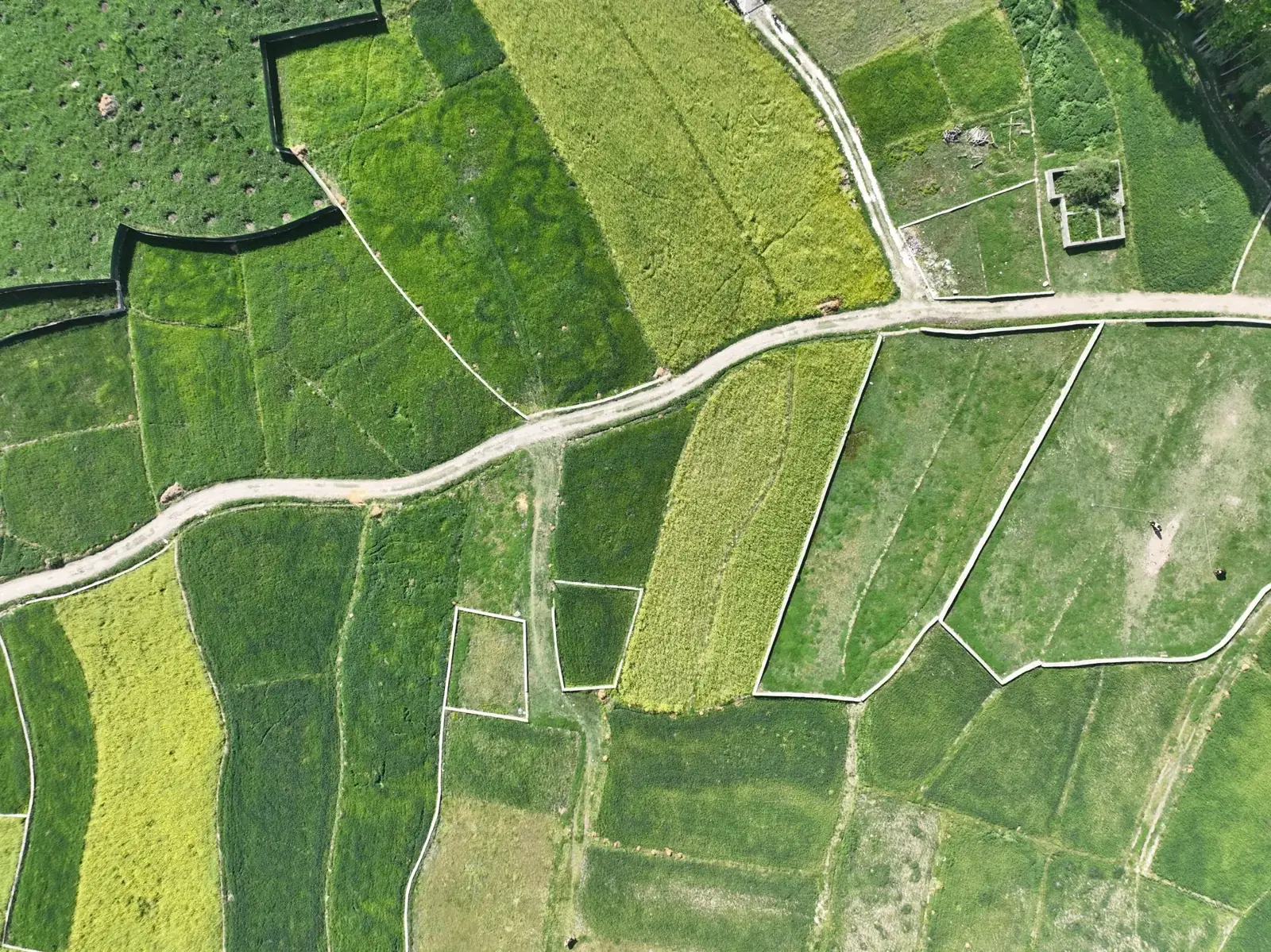
Buyers usually arrive with a budget and leave with a size, and the two are not the same question. The right size depends far more on how you plan to use the land than on how much you can spend.
Here is what each of our three standard sizes actually gives you, in square feet, in what fits on the ground, and in what it costs to look after.
Why we quote in square yards
Across Haryana and Rajasthan the same local unit means different areas in different tehsils. Bigha in particular varies enough to make a comparison meaningless, which is why we quote every parcel in square yards.
For reference: 1,500 sq. yd. is 13,500 sq. ft., 3,000 sq. yd. is 27,000 sq. ft., and 6,000 sq. yd. is 54,000 sq. ft. Our land measurement guide has full conversions for every regional unit.
1,500 sq. yd., the weekend cottage
This is the size most first-time buyers should take. It comfortably holds a two-bedroom cottage with a verandah, a lawn big enough for a game of cricket, a kitchen garden and parking for three cars.
It is also the easiest to maintain: one caretaker, a modest pump, and a weekend of attention a month keeps it looking cared for.
Three sizes at a glance
Indicative bands across the Sohna–Naugaon–Alwar belt. Actual pricing depends on frontage, water and services.
- 13,500 sq ft
- 1,500 sq. yd.
- 27,000 sq ft
- 3,000 sq. yd.
- 54,000 sq ft
- 6,000 sq. yd.
- 3–6 months
- Typical resale window
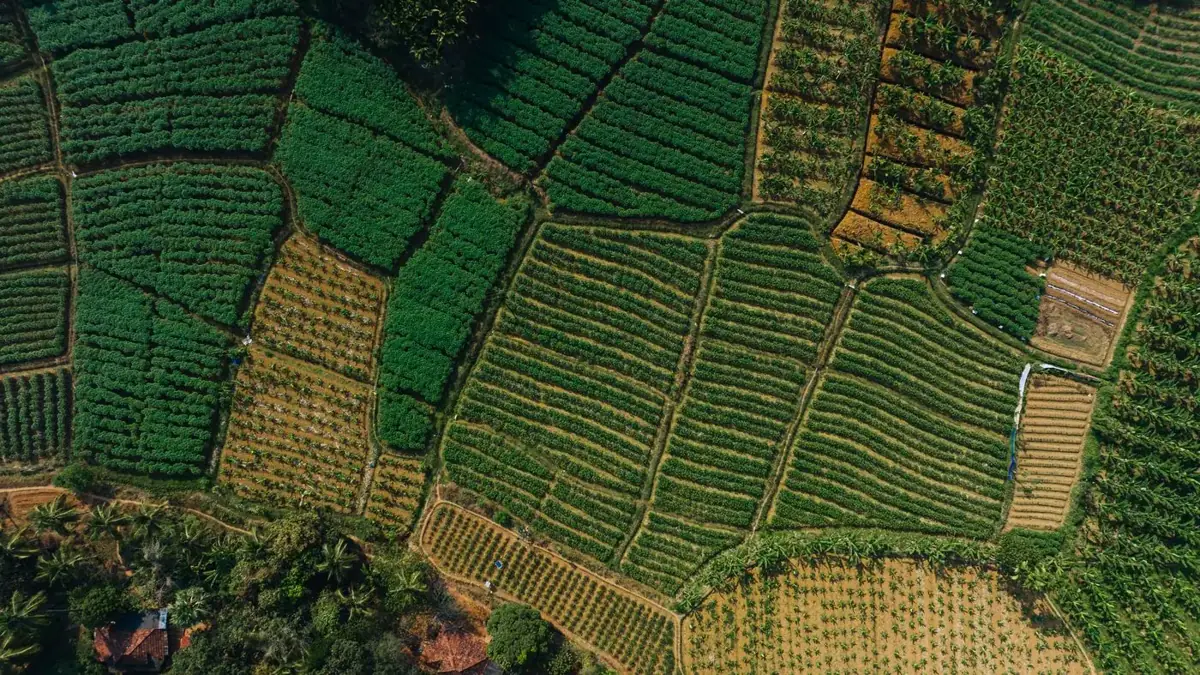 From the air
3,000 sq. yd., the family farm
At double the ground the plan changes rather than just stretches. Three bedrooms, a plunge pool, an outdoor kitchen, a strip of fruit trees along one boundary and still enough open lawn to lose sight of the house from the gate.
This is the size families with two generations visiting tend to settle on, and the size that resells fastest in our belt.
6,000 sq. yd., the estate
An acre and a bit. Room for an orchard that produces meaningfully, a paddock, a second structure for staff or guests, and a driveway long enough to feel like an arrival.
It needs real management. Budget a full-time caretaker and treat it as a small enterprise rather than a garden.
 Paperwork
Try the numbers yourself
Value today
₹97.5 L
Projected value after 5 years
₹1.88 Cr
Potential gain of ₹90.2 L on paper.
Indicative only. Actual rates depend on the parcel, road access and paperwork status.
What each size costs to run
Bare land at any size costs almost nothing beyond property tax. Once built and planted, running cost scales with planting and water more than with area: caretaker, pumping, seasonal labour and monsoon repairs.
The jump in effort between 3,000 and 6,000 sq. yd. is much larger than the jump between 1,500 and 3,000.
Which sizes resell best
1,500 and 3,000 sq. yd. have the deepest buyer pool and move fastest. 6,000 sq. yd. sells to a narrower audience and takes longer, though it usually fetches a stronger per-yard number when it does.
If liquidity matters to you, stay in the middle of the range.
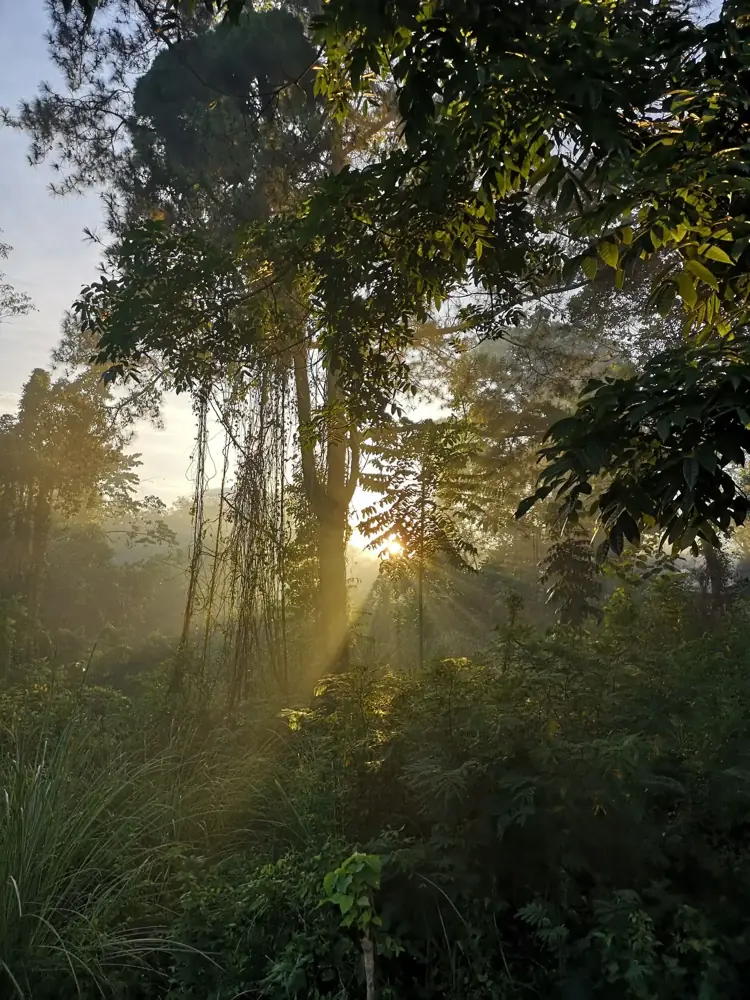 Air quality
A short way to choose
Ask how many nights a year you will genuinely spend there. Under twenty, take 1,500 and build small. Twenty to sixty, take 3,000. More than that, or if the plan involves an orchard as a project rather than a hedge, look at 6,000.
We will walk all three on one visit so the difference is physical rather than theoretical.
Go deeper