
A title chain looks intimidating and is mostly repetition. Once you know what the four core documents are and how they should agree with each other, you can read a file well enough to know which questions to ask your lawyer.
This is the same walkthrough we do with buyers across a table before a registry.
The four documents that matter
The parent deed establishes where the current ownership line began. The subsequent sale deeds trace each transfer since. The mutation entries show the revenue record being updated after each of those transfers. The jamabandi or khasra record is the state's current view of who holds the land.
Everything else in a file is supporting material. If these four agree with each other, you are in good shape.
Cross-checking them against each other
Match the survey or khasra number across all four. Match the area, a parcel that shrinks or grows between documents needs an explanation. Match names and spellings, and watch for a name that appears in a deed but never in a mutation entry.
The most common problem we see is not fraud, it is a break: a transfer that was registered but never mutated, leaving the revenue record two owners behind.
The document set we insist on
What sits in a Landkhojo file before a parcel is offered to any buyer.
- 30 yrs
- Title chain depth
- 4
- Core documents cross-checked
- 1
- Fresh EC, pulled directly
- 60 days
- Mutation after registry
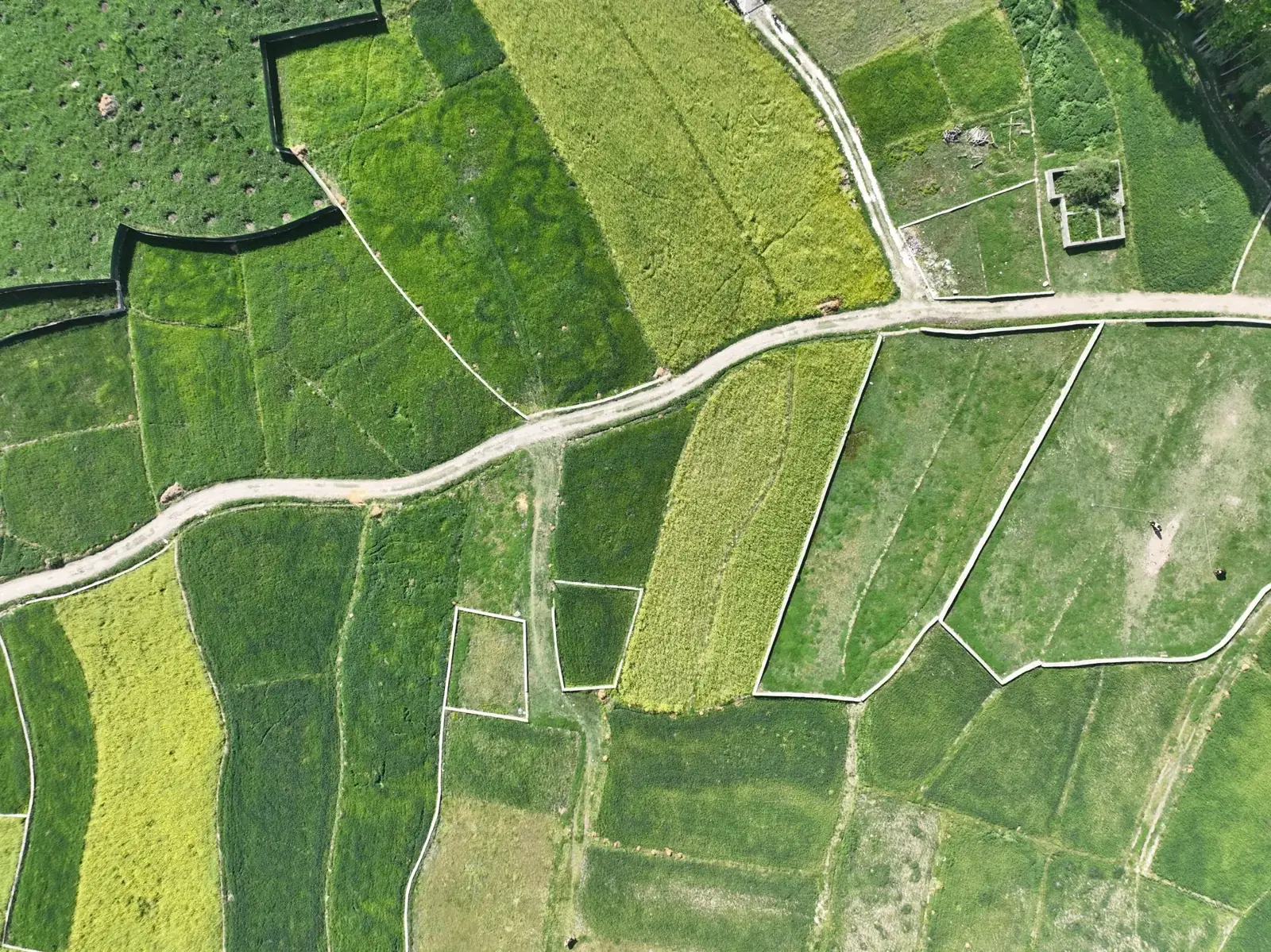
 From the air
Patterns that should slow you down
Rapid flips, where a parcel changed hands three times in two years, are usually a sign of someone laundering a defect through distance. Missing intermediate deeds, power-of-attorney sales in place of registered transfers, and inherited land with no succession record all deserve a lawyer's attention before money moves.
None of these are automatically fatal. All of them are reasons to stop and get an opinion in writing.
Where the encumbrance certificate fits
The title chain tells you who owned it; the EC tells you what is charged against it. Ask for thirty years, pull it yourself from the sub-registrar or state portal, and read the entries rather than the summary page.
A photocopy handed over by the seller is not evidence of anything.
 Paperwork
Try the numbers yourself
Value today
₹97.5 L
Projected value after 5 years
₹1.88 Cr
Potential gain of ₹90.2 L on paper.
Indicative only. Actual rates depend on the parcel, road access and paperwork status.
Agricultural land has extra layers
Land recorded as agricultural carries land-use rules, and in some states restrictions on who may buy. Check the recorded classification, any conversion order, and whether the buyer eligibility rules apply to you before you get attached to a parcel.
This is the single most common place where NRI buyers get bad advice.
What to hand your lawyer
Give them the four core documents, the EC, the approved layout if there is one, and the seller's identity documents. Ask for a written opinion, not a phone call, and ask specifically whether they would buy it.
A good opinion costs a small fraction of the transaction and is the best value in the entire process.
 Air quality
What our files contain
Every parcel we list arrives with a thirty-year chain, matching mutation entries, a fresh EC, revenue record, court search and land-use status. You get copies before you pay anything, and we expect you to have them checked independently.
If a seller's file cannot be assembled to that standard, we do not list the land.
Go deeper