

NRI buyers get more bad advice about Indian land than any other group, mostly because the rules differ sharply between residential property and agricultural land, and a lot of well-meaning brokers do not distinguish between the two.
This article sets out the shape of the rules, the practical mechanics of buying remotely, and the specific points where we insist buyers take professional advice.
The classification decides everything
For residential and commercial property the rules for NRIs and OCIs are broadly permissive. For land recorded as agricultural, plantation or farmhouse, the position is materially more restrictive and depends on the parcel's recorded classification.
So the first question on any parcel is not the price, it is what the revenue record says the land is. We tell buyers this before anything else, because it can end the conversation.
Related reading
Where you must take professional advice
Eligibility, repatriation of sale proceeds, and the tax deducted at source on a purchase from a non-resident seller are all areas where the rules change and the penalties for getting them wrong are real.
We connect every NRI buyer with a lawyer and a chartered accountant who handle these transactions regularly. We do not give this advice ourselves, and you should be wary of any broker who does.
Buying from abroad
The practical checkpoints for an NRI or OCI purchase in our belt.
- 1
- Specific POA, not general
- 0
- Cash component, ever
- 2
- Advisors: lawyer + CA
- 60 days
- Mutation after registry
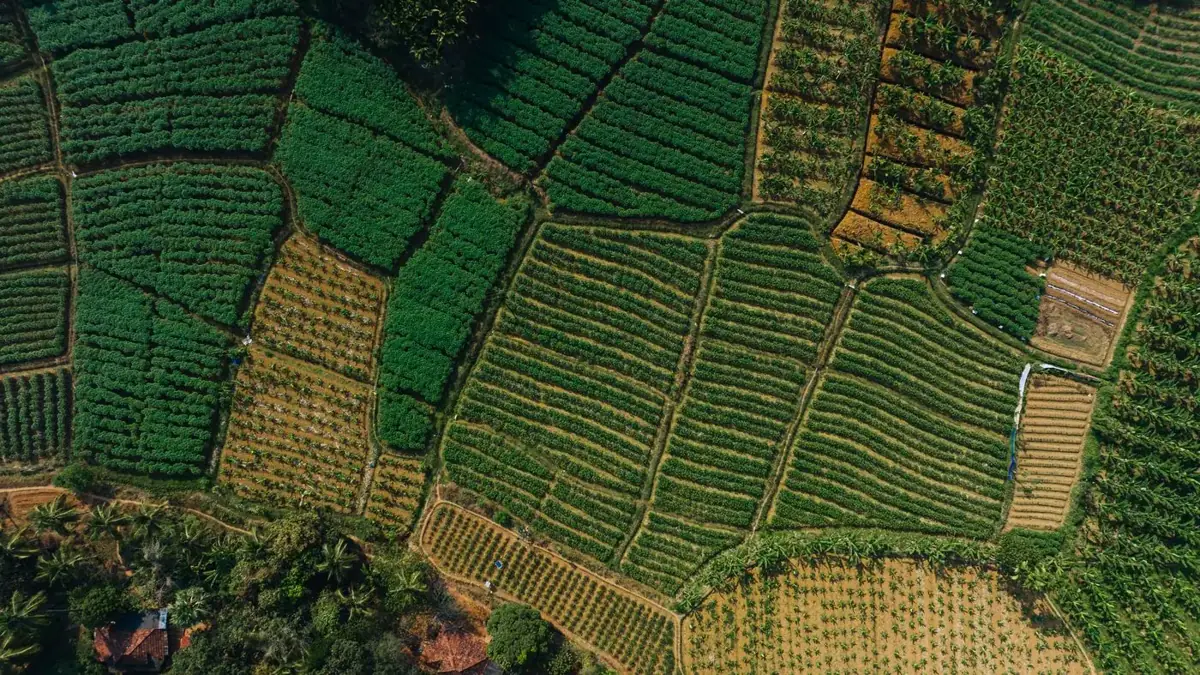 From the air
Power of attorney, done properly
Most remote purchases run on a specific power of attorney granted to a trusted individual, usually a family member, executed at the Indian consulate in your country of residence and then adjudicated in India.
Make it specific, not general. Name the survey number, name the transaction, and set an expiry. A general POA over your affairs handed to anyone is a risk you do not need to take.
Moving the money
Funds should come through normal banking channels from an NRE, NRO or FCNR account as advised by your CA. Keep every remittance documented; repatriating proceeds later depends entirely on being able to show how the purchase was funded.
Never allow a cash component. For a non-resident buyer it is not just risky, it complicates every subsequent repatriation.
 Paperwork
Try the numbers yourself
Value today
₹97.5 L
Projected value after 5 years
₹1.88 Cr
Potential gain of ₹90.2 L on paper.
Indicative only. Actual rates depend on the parcel, road access and paperwork status.
Running diligence from abroad
Ask for scans of the full document set and have your own lawyer in India review them before you travel. Ask for a video walk of the boundary with a timestamp and a visible survey number board.
Then, if at all possible, come once. A single visit before registry resolves the things no video captures.
After the purchase
Mutation, property tax and caretaking all need someone on the ground. We handle mutation as part of every purchase and offer caretaking for owners who are abroad, with periodic photographs of the boundary.
Keep your file digital and complete. When you eventually sell, a clean documented file from abroad is worth several percent on the price.
 Air quality
The realistic summary
It is very doable, and thousands of families do it every year. It requires more paperwork than a domestic purchase, a lawyer you trust, and a willingness to be told that a particular parcel is not available to you.
We would rather tell you that in week one than discover it at the registry office.
Go deeper