
Land prices in this belt are not a mystery. They follow tarmac with a lag of roughly twelve to eighteen months, and the lag is where the return lives.
This is what we have observed across the KMP and Delhi–Mumbai Expressway build-outs, and how we use it when advising buyers on which corridor to enter.
The pattern, repeated
Announcement moves prices a little and mostly moves talk. Land acquisition moves them again. The real repricing happens after an interchange actually opens and people drive it, usually within a year to eighteen months.
Buyers who enter at announcement carry years of dead time. Buyers who enter during construction, when funding is committed and work is visible, have historically done best in this belt.
KMP: access became real
The Kundli–Manesar–Palwal corridor turned an awkward cross-country drive into a straightforward one, and the Sohna and Tauru pockets repriced accordingly once the interchanges were in use.
Crucially it also widened the buyer pool, land that had been a South Delhi weekend proposition became reachable from West and North Delhi too.
Corridor effect, observed
Belt-level observations along the Sohna–Naugaon–Alwar stretch. Individual parcels vary widely.
- 12–18 mo
- Lag after interchange opens
- 12–18%
- Five-year belt CAGR
- 3
- Tests before believing a corridor
- 10 yr
- Alwar-side horizon
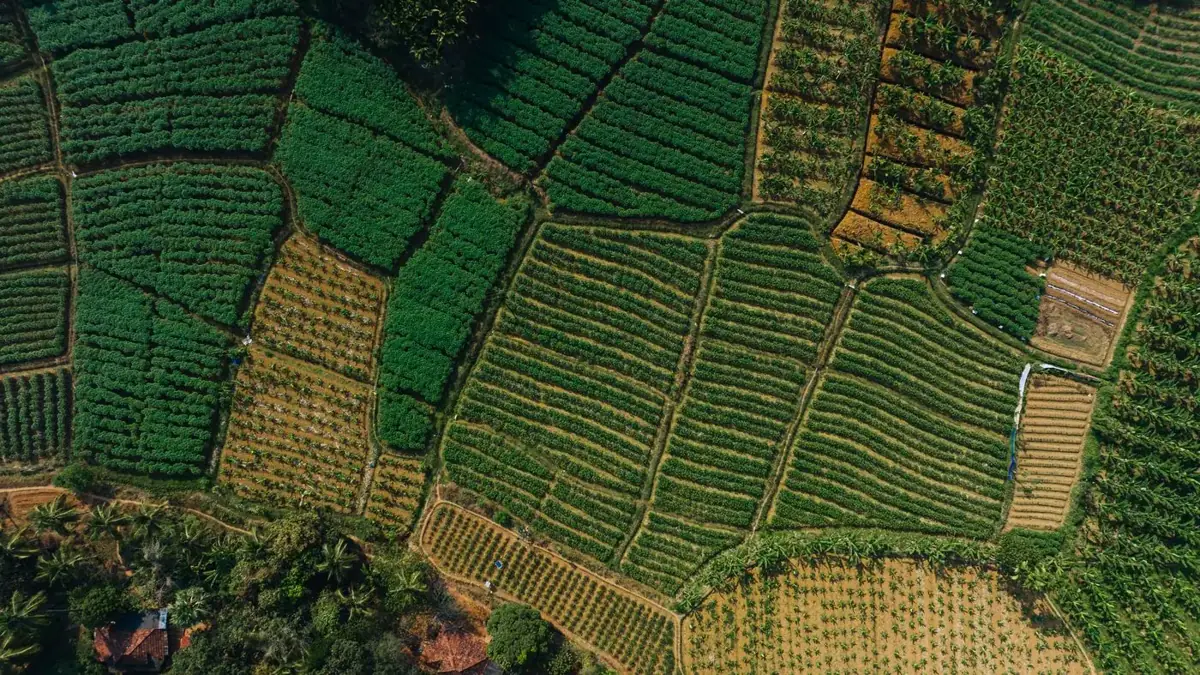 From the air
The Delhi–Mumbai Expressway and the Alwar side
The expressway pulled the Alwar and Sariska-side belt inside a realistic weekend drive for the first time. Entry prices there remain a fraction of Sohna, and the horizon is longer, but the direction is set.
This is where buyers with a ten-year view are concentrating now.
Jewar and the eastern catchment
Airport catchments behave differently from road corridors: the effect is broader, slower and more dependent on the surrounding employment build-out actually materialising.
Treat airport-adjacent land as a longer, less certain bet than a completed interchange.
 Paperwork
Try the numbers yourself
Value today
₹97.5 L
Projected value after 5 years
₹1.88 Cr
Potential gain of ₹90.2 L on paper.
Indicative only. Actual rates depend on the parcel, road access and paperwork status.
How to read the next corridor
Three tests: is the funding committed, is physical work visible on the ground, and is there a completion date the contractor is actually working to. Two out of three is a maybe; one out of three is a story.
Then drive it. Nothing on a map tells you what a road feels like at 7pm on a Friday.
The honest caveats
Past corridor moves do not guarantee the next one. Infrastructure slips, and belt-average returns hide a wide spread between individual parcels: frontage, access and title quality all matter more than the corridor at the parcel level.
Anyone quoting you a single guaranteed percentage is selling, not advising.
 Air quality
What we tell buyers
Pick the corridor by your holding period, then pick the parcel by access and paperwork. Corridor choice sets the ceiling; parcel choice decides whether you get near it.
We share circle rates, recent comparable transactions and our own resale data so you can model it yourself.
Go deeper